Launching a private label marlin fish floss OEM product takes seven steps: check demand, pick an OEM, protect your recipe, design packaging, get certifications, handle MOQ and launch, then grow. Private label marlin fish floss OEM means another company makes the product while your brand controls packaging, marketing, and delivery. This plan moves you from idea to store shelves without wasted effort. You will learn what to do first, which contracts matter most, and how to avoid costly mistakes. Each step builds on the last one, so follow them in order. The marlin fish floss market rewards brands that prepare well. Your fish floss product needs a strong base before production starts.
Key Takeaways
Check that people really want your product, and know exactly who will buy it, before you reach out to any factory.
Before sharing any details, protect your recipe by having both sides sign a mutual NDA and an IP assignment agreement.
Design packaging that follows FDA rules and uses strong barriers to keep the product fresh for a long time.
Make sure your OEM has GFSI certification and a working HACCP plan to keep food safe.
Negotiate MOQs based on your sales forecast, and start in one channel to collect data.
Watch how fast products sell and what customers say to plan when to order more and add new items.
Treat your first launch as a test run to learn and improve your plan before you grow bigger.
Step 1: Validate Marlin Fish Floss Demand and Product Viability
Before you contact any manufacturer, define your customer. Your marlin fish floss product needs a clear audience. You cannot sell to everyone. You must know who will buy it, why they want it, and what problem it solves for them.
Identify Target Buyers and Fish Floss Must-Haves
Start with the people who already eat fish floss. These consumers live in Asian markets or grew up in households that use this ingredient regularly. They know what good floss tastes like. They expect a certain texture, moisture level, and flavor intensity. Your product must meet those expectations or you will lose them to established brands.
Think about how these buyers use fish floss. Many sprinkle it over a rice bowl for a quick meal. Others use it as a filling for sandwiches or buns. Some add it to noodles or congee. Your marlin fish floss must work across these uses. It needs a fine, fluffy texture that clings to rice. It needs balanced seasoning that does not overpower the dish. It needs consistent moisture so it stays shelf-stable without drying out.
You also need to consider new buyers. These are people who have never tried fish floss before. They might discover your product through social media or a friend. For them, your packaging must explain what the product is and how to use it. Your flavor profile should be approachable, not too fishy or salty. You want to convert curious shoppers into repeat customers.
Differentiate from Existing Seafood Snacks
The seafood snack aisle already has many options. You will compete with dried squid, fish jerky, seaweed snacks, and other fish floss brands. Your marlin fish floss needs a clear reason to exist. You cannot copy what others do and expect success.
Marlin offers a distinct advantage. This fish has a firmer texture and richer flavor than common tuna or pollock. You can position your product as a premium option. You can highlight the marlin's natural umami taste. You can emphasize that your floss comes from a single species, not a blend of cheap fish. This story matters to quality-conscious buyers.
You also need a positioning angle. Maybe your product uses less sugar than competitors. Maybe you offer a spicy variant for younger consumers. Maybe you package in single-serve pouches for on-the-go snacking. Your differentiation must be visible on the package and easy to explain in one sentence. If you cannot state your unique value clearly, you have not finished this step.
Draft Specifications and Confirm Supply
Write a product brief before you talk to any OEM. This document should cover flavor profile, texture, moisture content, packaging type, labeling requirements, and target price point. Include your target shelf life and any nutritional claims you want to make. The more detail you provide, the better your manufacturer can quote accurately.
Your brief should also address supply. Marlin availability varies by season and fishing region. You need to confirm that your chosen OEM can source consistent raw material. Ask about their supply chain and whether they have backup suppliers. Expect roughly 4–10 weeks for formulation iterations. Your first samples will not be perfect. Plan for multiple rounds of feedback and adjustment. This validation phase protects you from costly mistakes later.
Step 2: Vet a Certified Marlin Fish Floss OEM Partner
Your marlin fish floss OEM partner controls your product's quality, safety, and consistency. Picking the wrong manufacturer is a risk you cannot take. This choice needs time, research, and direct checks. You must look closely at every option before you sign any contract.
Review Seafood and Shelf-Stable Protein Experience
Find manufacturers with a strong background in seafood processing. You want a partner who knows the special challenges of working with fish. They should handle raw material freshness, control temperature during processing, and stop spoilage. Ask about their current products. Do they make canned tuna, sardines, or other shelf-stable seafood? Have they worked with fish floss before? These points matter because marlin needs different care than other fish types.
The manufacturer should also show skill in making shelf-stable protein. This product type requires tight moisture control, proper heat treatment, and careful packaging. A partner who only makes fresh or frozen items may not have the skills for long-shelf-life goods. Ask for a list of their current private label clients. Reach out to those clients if you can. Ask about the manufacturer's quality, communication, and on-time delivery. This research takes work but protects your brand's reputation.
Check Certifications and Audit Production
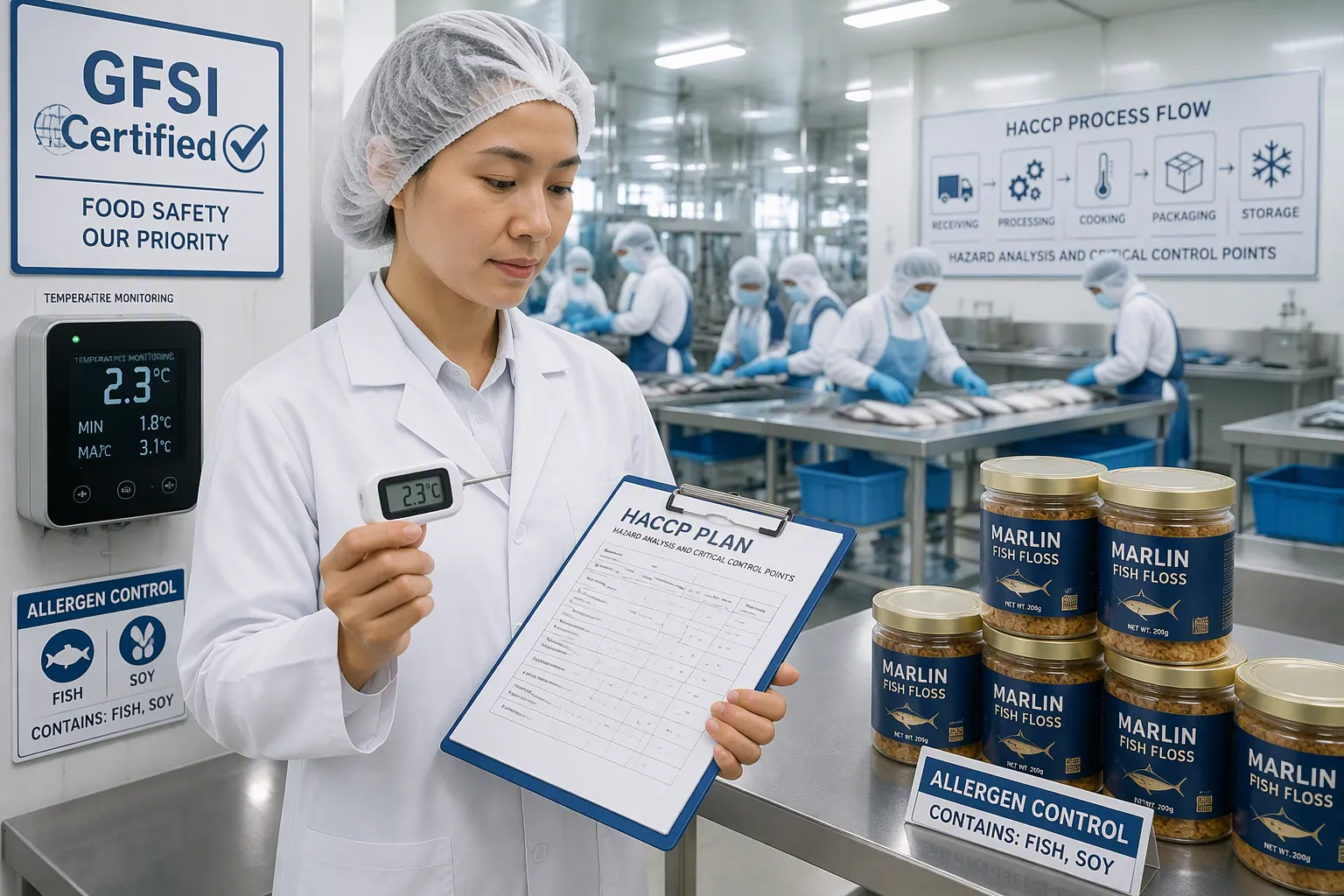
Certifications show which safety standards the factory meets. Look for GFSI-recognized programs such as SQF, BRC, or FSSC 22000. These certifications need regular third-party audits and show a commitment to food safety. Ask to see current certificates and check their expiration dates. A manufacturer who is slow to share these documents is a warning sign.
You should also do your own audit when possible. Visit the facility in person or hire a third-party inspector. Walk through the production floor and watch their sanitation practices. Check how they keep raw and cooked products separate. Look at their allergen control steps. Review their HACCP plan and ask about recent audit results. This hands-on check gives you confidence that the factory works as claimed. Remember that the manufacturer handles production, while your brand owns packaging, marketing, pricing, and distribution. You need a partner you can trust with your product's safety.
Request Samples and Refine Formulation
Never commit to a manufacturer without tasting their work. First, request samples of their current fish floss products. Check texture, flavor, moisture, and appearance. Then ask for custom samples based on your product brief. Give detailed specs about your desired seasoning profile, flake size, and color. The manufacturer should send back a sample that fits your needs.
Expect several rounds of sample changes. Your first try may come back too salty or too dry. The second round might fix texture but miss the flavor target. This process takes 4–10 weeks, so plan for it. Keep clear notes on each sample. Write down what works and what needs fixing. Share this feedback clearly with the manufacturer. A partner who listens and adjusts quickly is worth more than one with lower prices but poor communication. Your final sample should meet every spec in your product brief before you move ahead.
Step 3: Protect Your Recipe with NDA and IP Assignment
Your marlin fish floss recipe is the base of your brand. Without legal protection, another company could copy your formula and sell it for less. You must secure your intellectual property before you share any details with a manufacturer. This step stops costly fights and keeps your product special.
Sign Mutual NDA Before Formula Discussions
A mutual non-disclosure agreement (NDA) protects both sides. You sign it before you share your product brief or talk about your formula. The manufacturer also signs it before they show their production methods or pricing. This agreement keeps all shared information private.
Your NDA should cover several key points. It must say what counts as confidential information. This includes your recipe, ingredient sources, packaging designs, and marketing plans. It should also cover the manufacturer's private processes and equipment details. The agreement must state how long the confidentiality lasts. Most NDAs run for three to five years. Some last longer for trade secrets.
You should also say what happens if someone breaks the agreement. The NDA should list legal results and money penalties. This creates a strong warning against sharing your formula with rivals. Remember that your shredded marlin fish floss recipe has value only if you keep it secret. An NDA is your first shield.
Assign IP Ownership and Non-Compete Clause
Your NDA protects secrecy, but you also need ownership rights. The intellectual property (IP) assignment clause gives all rights to you. This includes the formula, production process, and any improvements made during development. You must own these assets fully.
The IP clause should state that any work made for your product belongs to you. This covers sample formulas, final recipes, and even packaging ideas. The manufacturer cannot use your formula for another client. They cannot sell a similar product under their own brand. You need this protection to keep your market spot.
A non-compete clause adds another layer of safety. This clause stops the manufacturer from making a competing product for a set time. The usual term runs one to three years. The clause should also stop them from sharing your recipe with their other clients. Your fish floss product stays only for your brand during this time.
Cover Quality, Liability, and Remedy Terms
Your contract must also cover quality standards and legal duty. The quality section should define acceptable moisture levels, texture, and flavor consistency. It should list testing steps and inspection rights. You need the power to reject batches that do not meet your standards.
The liability clause decides who pays for problems. If the manufacturer uses dirty ingredients, they pay the cost. If your packaging design causes a labeling violation, you take responsibility. Clear liability terms stop expensive arguments later. You should also include remedy terms that explain what happens when issues appear. This includes replacing bad products, refunds, or ending the contract.
Your contract should also cover recall steps. If a safety issue shows up, you need a clear plan. The manufacturer should help fully with any recall efforts. They should also carry product liability insurance. This protects your brand from money damage if a consumer gets sick. A full contract protects your business and your name.
Step 4: Design Packaging for Shredded Marlin Fish Floss
Your packaging does more than hold your product. It keeps the floss safe, follows the law, and helps sell your brand. You must plan it well before you buy any materials. This step covers the labels, the protective layers, and the shipping boxes you need.
Meet FDA Labeling and Allergen Rules
Your label must follow FDA rules for food items. You need a clear name for the product. Write "Shredded Marlin Fish Floss" in bold letters on the front. You also need the net weight. This shows how much product is inside. Put it on the lower third of the front label.
Your ingredient list must be on the label. List every ingredient from most to least by weight. Include all additives and preservatives. You must clearly state any major food allergens. Marlin is a fish, so your label must say "Contains Fish" in a visible spot. This warning helps protect people with allergies.
You also need a nutrition facts panel. This panel shows calories, protein, fat, carbs, and sodium per serving. You must base this panel on lab tests of your final product. Your manufacturer can help you get these tests done. Country-of-origin labeling may also apply. If your marlin comes from a certain country, you must say that on the label. Check current FDA rules to confirm all requirements before you print.
Choose Barrier Packaging for Shelf Life
Your shredded marlin fish floss needs protection from moisture and oxygen. These two things cause spoilage and flavor loss. You need packaging that blocks both. Look for multi-layer films with aluminum or metallized layers. These materials create a strong shield against outside air and water vapor.
Your packaging choice affects how long the product lasts. A weak barrier might give you only a few months of shelf life. A strong barrier can extend that to a year or more. Your product brief should state your target shelf life. Share this number with your packaging supplier. They can suggest the right film structure for your needs.
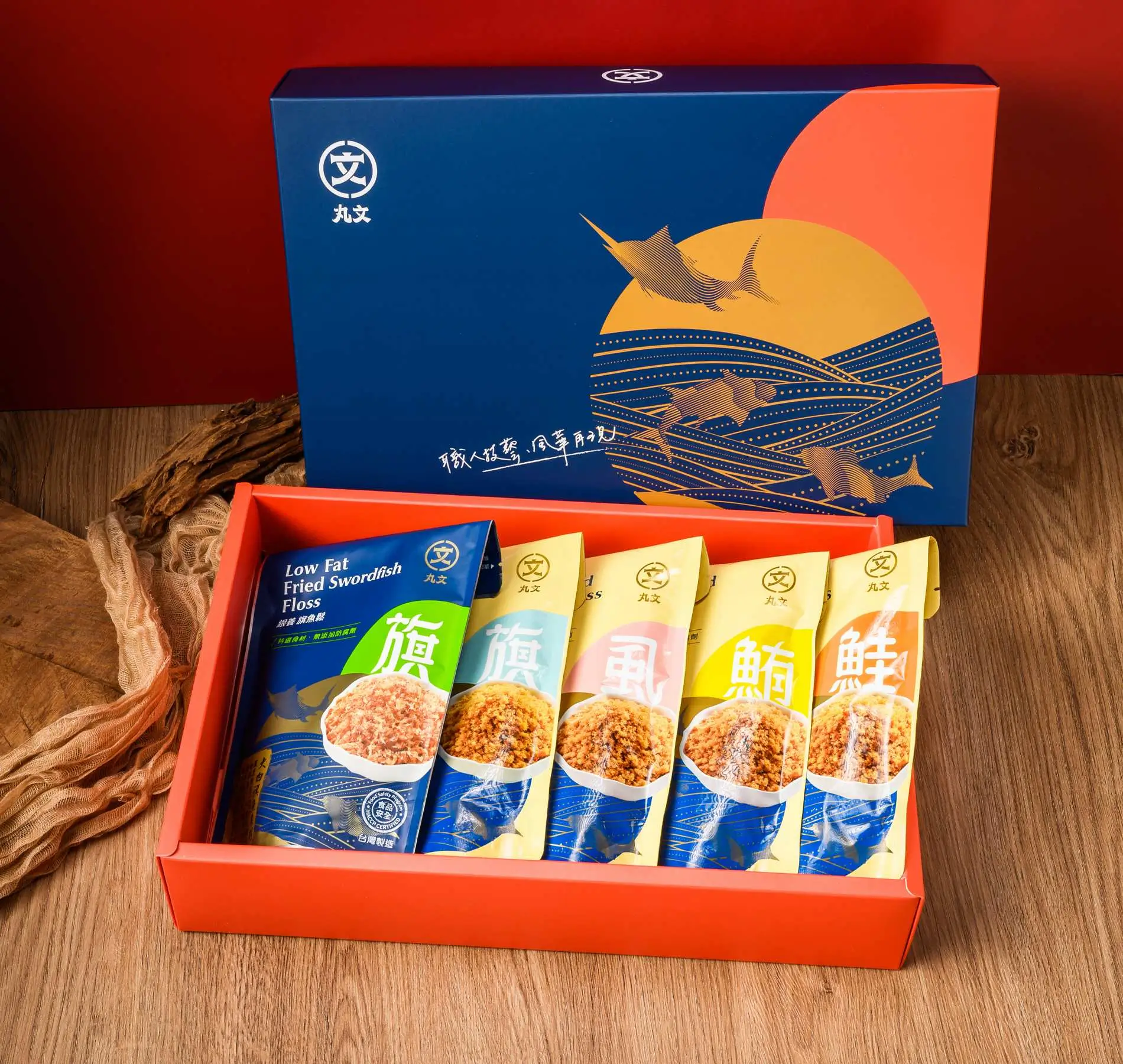
Think about the package format too. Many fish floss brands use stand-up pouches with resealable zippers. This format keeps the product fresh after opening. You might also offer smaller single-serve pouches for snacking. Some brands package their stir-fried shredded marlin fish floss in rigid plastic tubs with foil seals. These tubs protect the floss well and allow easy scooping. Choose a format that fits how your customers will use the product.
Finalize Barcodes and Outer Cartons
Your retail packaging needs a UPC barcode. This code lets stores track inventory and process sales. You must buy a unique UPC number for your product. Several authorized companies sell these codes. Your barcode must print clearly on the package. Test it with a scanner before you run the full production.
Your outer cartons matter for shipping and storage. These cartons protect your individual packages during transport. They also carry shipping labels and handling instructions. Design your cartons to fit your product dimensions exactly. Too much empty space leads to product damage. Too little space makes packing difficult and slow.
Your cartons should also show basic product information. Print the product name, quantity, and batch number on each carton. This helps warehouse staff find your product quickly. You should also include storage instructions. Most fish floss products need cool, dry storage conditions. Clear labeling prevents mishandling during distribution.
Your packaging design should also reflect your brand identity. Use colors, fonts, and images that match your brand story. A premium marlin product might use dark blues and silver accents. A snack-focused brand might use bright colors and playful graphics. Your package is your first impression on store shelves. Make it count.
Step 5: Certify Stir-Fried Shredded Marlin Fish Floss Controls
Food safety certification keeps your brand and customers safe. You cannot skip this step. Stores and distributors will ask for proof that your product meets safety rules. You need the right certifications before you launch. This step covers the systems, controls, and documents you must get ready.
Align with GFSI-Recognized Food Safety Systems
Global Food Safety Initiative (GFSI) recognition matters in the seafood industry. Big stores expect suppliers to have one of these certifications. The most common options include SQF, BRC, and FSSC 22000. Each standard needs regular third-party audits. Each audit checks the factory's whole food safety program.
Your OEM partner should already have one of these certifications. Ask to see their current certificate. Check the expiration date and what the audit covers. The scope must include seafood processing and shelf-stable product making. A certificate that only covers packaging or storage does not help you.
You should also know what the audit checks. GFSI standards look at raw material receiving, temperature controls, cleaning steps, and worker training. They make sure the factory follows its own written plans. They review traceability records from raw fish to finished goods. Your marlin fish floss production must fit inside this certified system.
If your OEM lacks GFSI certification, you face a harder path. You would need to set up your own audits and build a separate food safety program. This costs more money and takes more time. Choose a certified partner from the start. Your stir-fried shredded marlin fish floss needs this strong base.
Confirm HACCP and Allergen Cross-Contact Controls
Hazard Analysis and Critical Control Points (HACCP) is a legal rule for seafood products in the United States. Your manufacturer must have a working HACCP plan. This plan finds every step where contamination could happen. It sets limits for temperature, cooking time, and moisture levels. It also explains what to do when something goes wrong.
Ask your OEM to show you their HACCP plan. Look for critical control points in the cooking and drying stages. The stir-fried shredded marlin fish floss process must reach a temperature that kills harmful bacteria. The drying step must lower moisture enough to stop spoilage. Each control point needs a written limit and a checking method.
Allergen control needs extra attention. Your product contains fish, which is a major allergen. The factory must stop cross-contact with other allergens like soy, wheat, or peanuts. Many fish floss recipes include soy sauce or wheat-based seasonings. You must decide if your product has these ingredients or avoids them completely.
The factory needs separate production lines or deep cleaning between runs. They need dedicated tools and storage areas for allergen-containing ingredients. Their packaging area must stop accidental mixing of different products. Ask about their allergen testing program. Swab tests on equipment surfaces check that cleaning works. Your label must list every allergen in your final product.
Prepare Import and Export Documentation
Your certification work goes beyond the factory walls. You need proper documents for shipping and customs clearance. The exact paperwork depends on your source country and your target market.
Start with a Certificate of Origin. This document states where your marlin fish was caught and where processing happened. Customs officials use it to apply tariffs and trade agreements. Your OEM should give you this certificate for each shipment.
You also need health certificates for many markets. These documents confirm that your product meets the importing country's food safety rules. Government agencies issue these certificates after checking the production facility. The United States FDA requires prior notice for imported food shipments. You must send this notice before your product reaches the border.
Keep a full file of all certifications and test results. Include your HACCP plan summary, GFSI certificate, and lab analysis reports. Store these documents digitally and on paper. You will need them for store compliance reviews and for customs checks. A complete documentation system makes your launch smoother and protects you from delays.
Step 6: Set MOQs, Pricing, and Launch Channel
You have a certified partner, a protected recipe, and approved packaging. Now you must decide how much to make, what to charge, and where to sell first. These choices shape your cash flow and your early progress. Get them right, and you build a strong base. Get them wrong, and you waste your budget before real sales start.
Negotiate MOQs Around Forecast and Shelf Life
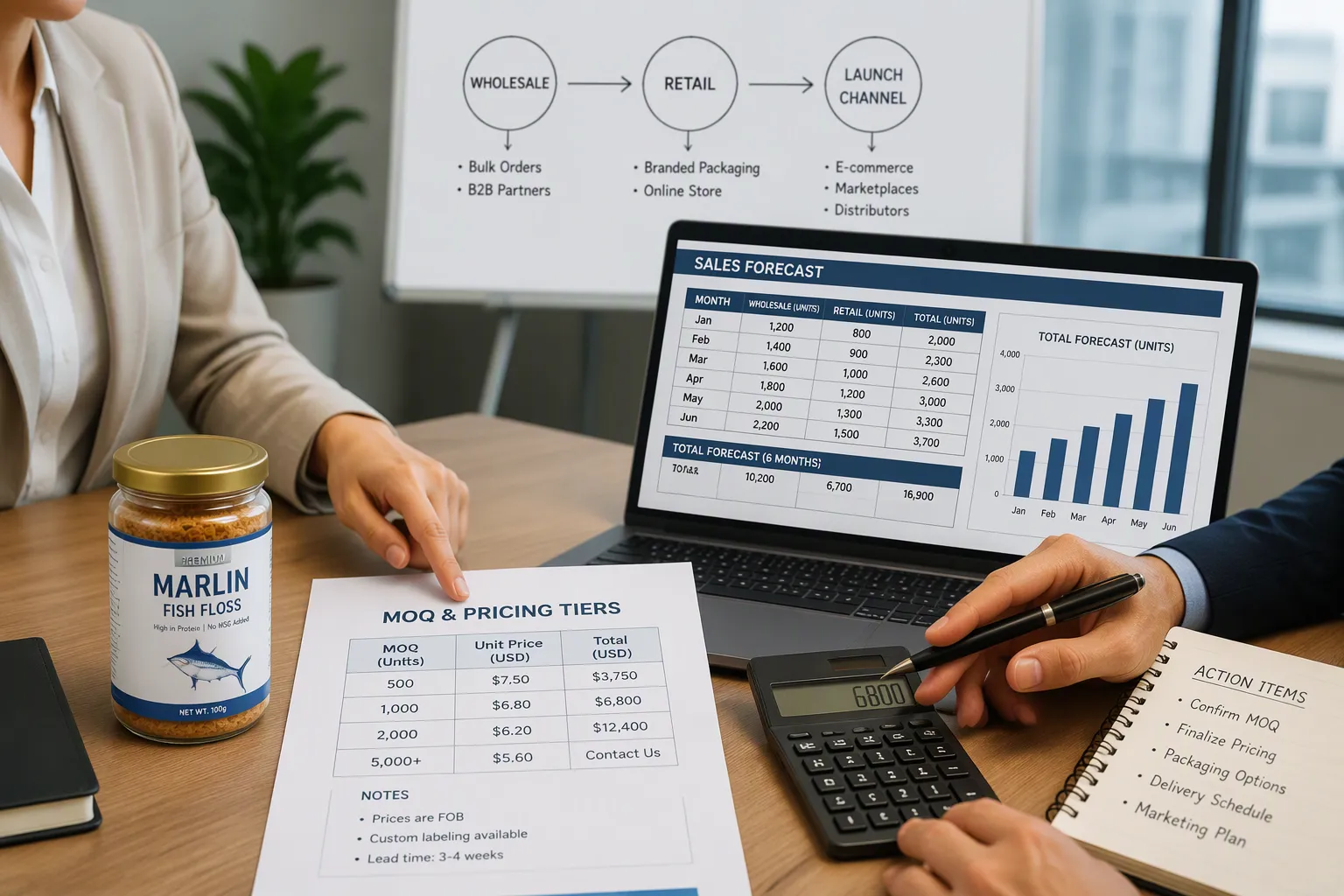
Your manufacturer will give you a minimum order quantity (MOQ). This number is the smallest batch they will make for you. MOQs differ a lot across seafood OEM factories. Some need 500 units per SKU. Others ask for 5,000 or more. You must talk about this number carefully.
Start with a realistic sales forecast. Do not guess. Look at similar fish floss products in your target stores. Estimate how many units you can sell in the first 90 days. Your first order should cover about 8–12 weeks of expected sales. This amount gives you room to learn without having too much unsold stock.
Shelf life plays a big part in this choice. Your marlin fish floss may last 12 months with good barrier packaging. That timeline gives you flexibility. You can order a bigger batch and sell it over time. If your shelf life is only 6 months, you need faster turnover. Your MOQ must match that speed.
Ask your OEM about their MOQ flexibility. Many factories offer tiered pricing. A smaller first order costs more per unit. A larger order lowers your unit price. You can negotiate a pilot run at a higher price, then commit to bigger orders once you confirm demand. This method limits your risk during the launch phase.
Build Pricing with Wholesale and Retail Margins
Your pricing structure must cover every cost in your chain. Start with the OEM production cost per unit. Add packaging materials, labeling, and freight. Include your marketing budget and any storage fees. Then add the margin you need to run your business. This total becomes your wholesale price.
Wholesale pricing usually sits at 2.0–2.5 times your landed cost. This multiplier covers your overhead and leaves room for profit. Retailers then mark up your wholesale price by 30–50 percent. A product that costs you $3.00 to make might wholesale at $7.50 and retail at $10.99. These numbers must stay competitive within the fish floss category.
Check competitor prices before you finalize your numbers. Walk through Asian markets and scan online retailers. Note the price per ounce for leading brands. Your product should sit within the same range unless you offer a clear premium story. A higher price demands visible value, such as single-species marlin or lower sugar content. A lower price must still leave you with healthy margins.
Launch in One Channel and Measure Velocity
Do not spread yourself thin across many stores. Choose one sales channel for your first launch. This focus lets you gather real data without splitting your attention. You can pick a local grocery chain, an online marketplace, or a specialty seafood retailer. Each option has different requirements and timelines.
Your chosen channel needs a clear plan. Set a launch date and work backward. Confirm your inventory arrives at least two weeks early. Train your sales representatives on the product story. Provide samples so store staff can taste your marlin fish floss. Their excitement drives initial recommendations to shoppers.
Track your sell-through rate from day one. This rate shows how quickly your product leaves the shelf. A strong velocity means your product moves faster than the category average. A weak velocity signals a problem with pricing, packaging, or placement. Review your numbers weekly during the first month. Adjust your in-store demos, digital ads, or shelf position based on what you see.
Your first launch teaches you more than any market research ever could. You learn which package size resonates with buyers. You discover which flavors attract repeat purchases. You see how your pricing compares to real-world competition. Use this data to refine your approach before you expand to new channels. One successful store beats ten struggling ones every time.
Step 7: Scale with Sell-Through Data and Reorders
Your first launch gives you real numbers. These numbers show what works and what needs to change. You must watch them closely. Your sell-through rate shows how fast your marlin fish floss moves off store shelves. This rate tells you if customers like your product enough to buy it again.
Track Velocity, Reorders, and Customer Feedback
Velocity means how fast your product sells. To find it, divide units sold by units available. A strong velocity rate means your product sells faster than similar seafood snacks. Check this number every week during your first month. Compare it to category averages from your retailer. If your velocity is low, check your pricing, shelf position, or packaging design.
Customer feedback matters just as much as sales numbers. Read every online review with care. Listen to what shoppers say about texture, flavor, and package size. Ask your retail partners for their notes. Store staff hear customer comments every day. Their insights help you spot problems before they get bigger.
Use this data to plan your reorder timing. Your first order should sell through in 8–12 weeks. Place your reorder before you run out completely. Running out of stock costs you sales and momentum. Your OEM needs lead time for production and shipping. Build a reorder schedule that keeps your shelves full without holding too much extra stock.
Expand SKUs and Retail Distribution
Once your first product proves itself, think about new SKUs. A second flavor gives your brand more shelf presence. Consider a spicy variant for younger consumers. Offer a lower-sodium version for health-conscious buyers. Each new SKU should share your core marlin recipe while offering a different experience.
Your packaging format can also grow. Single-serve pouches work well for on-the-go snacking. Larger family-size bags appeal to households that use fish floss often. You might also create a gift pack with multiple flavors. Each format reaches a different buying occasion.
Retail expansion follows your data. Start with stores in your launch region. Your sell-through numbers convince buyers to give you more shelf space. Approach new retailers with your proven velocity data. Show them how your product beats category averages. This evidence makes your pitch stronger than any promise.
Plan Seasonal Replenishment and New Flavors
Seafood snack sales follow seasonal patterns. Demand rises during holidays and gift-giving seasons. Many families use fish floss as a topping for festive rice bowl meals. Plan your production schedule around these peaks. Order extra inventory before major holidays. Your OEM needs advance notice to secure raw marlin supply.
Your flavor development should also follow the calendar. Test new recipes during slower months. Use customer feedback to guide your choices. A limited-edition seasonal flavor creates urgency and excitement. This strategy drives trial among new customers while rewarding loyal fans.
Your scaling plan must stay flexible. Review your sales data monthly. Adjust your production forecasts based on real trends. Keep your supply chain relationships strong. A reliable OEM partner helps you respond quickly to market changes. Your marlin fish floss brand grows through steady, data-driven decisions. Each successful reorder builds your confidence and your business.
You now have the complete roadmap for launching your marlin fish floss oem brand. Seven steps stand between your idea and store shelves. Two actions make or break your success: choosing a certified OEM partner and protecting your recipe with an NDA. Everything else builds on these foundations.
Your first launch is a learning experience, not a perfection contest. Pick one sales channel and gather real sell-through data. Let those numbers guide your next move. Do not expand until you see consistent velocity.
Your next step is clear. Draft your product specification, sign a mutual NDA, and request a sample run from a certified marlin fish floss manufacturer. Your marlin fish floss brand starts with that first conversation. Take action today.
FAQ
How long does the full process take from idea to first sale?
Plan for 4 to 6 months from your first OEM conversation to store shelves. Formulation alone takes 4–10 weeks. Add packaging design, certification reviews, and production lead time. Your timeline stretches further if you need custom packaging materials or face import delays.
What certifications must my OEM partner hold?
Look for GFSI-recognized schemes like SQF, BRC, or FSSC 22000. Your partner also needs a working HACCP plan for seafood. Ask to see current certificates and check expiration dates. A certified factory saves you from building your own food safety program from scratch.
How much money do I need to start?
Your startup budget depends on your MOQ, packaging choices, and certification needs. A small pilot run with basic packaging might cost $10,000–$25,000. Larger orders with custom barrier films and retail-ready cartons cost more. Build a detailed cost sheet before you commit to any manufacturer.
What is a typical MOQ for marlin fish floss oem production?
Most seafood OEM factories set MOQs between 500 and 5,000 units per SKU. Your forecast and shelf life determine the right number. Start with a smaller pilot order at a higher unit price. Then scale up once you confirm real demand through sell-through data.
How long does stir-fried shredded marlin fish floss stay fresh?
With proper moisture- and oxygen-barrier packaging, your product can last 12 months or more. The exact shelf life depends on your recipe, drying process, and film quality. Your OEM should run accelerated shelf-life tests before you finalize packaging. Store the product in cool, dry conditions to protect texture and flavor.
Can I change my recipe after production starts?
Yes, but changes cost time and money. Each formula adjustment requires new samples, lab tests, and possibly new label approvals. Your contract should define how many revision rounds your pricing includes. Major changes may also trigger new shelf-life testing. Plan carefully before you lock your final recipe.
Do I need my own food license to sell private label fish floss?
You need a retail food license or business permit in most states. Your OEM holds the manufacturing license, but you hold responsibility for labeling compliance. Check your local requirements for food distributors and importers. Your contract should clarify who handles recalls and liability for safety issues.
What happens if my first launch does not sell well?
Slow sales do not mean failure. Review your pricing, packaging, and shelf position first. Talk to store staff about customer reactions. Adjust your marketing approach before you abandon the product. Your first launch is a learning experiment. Use the data to refine your next move.