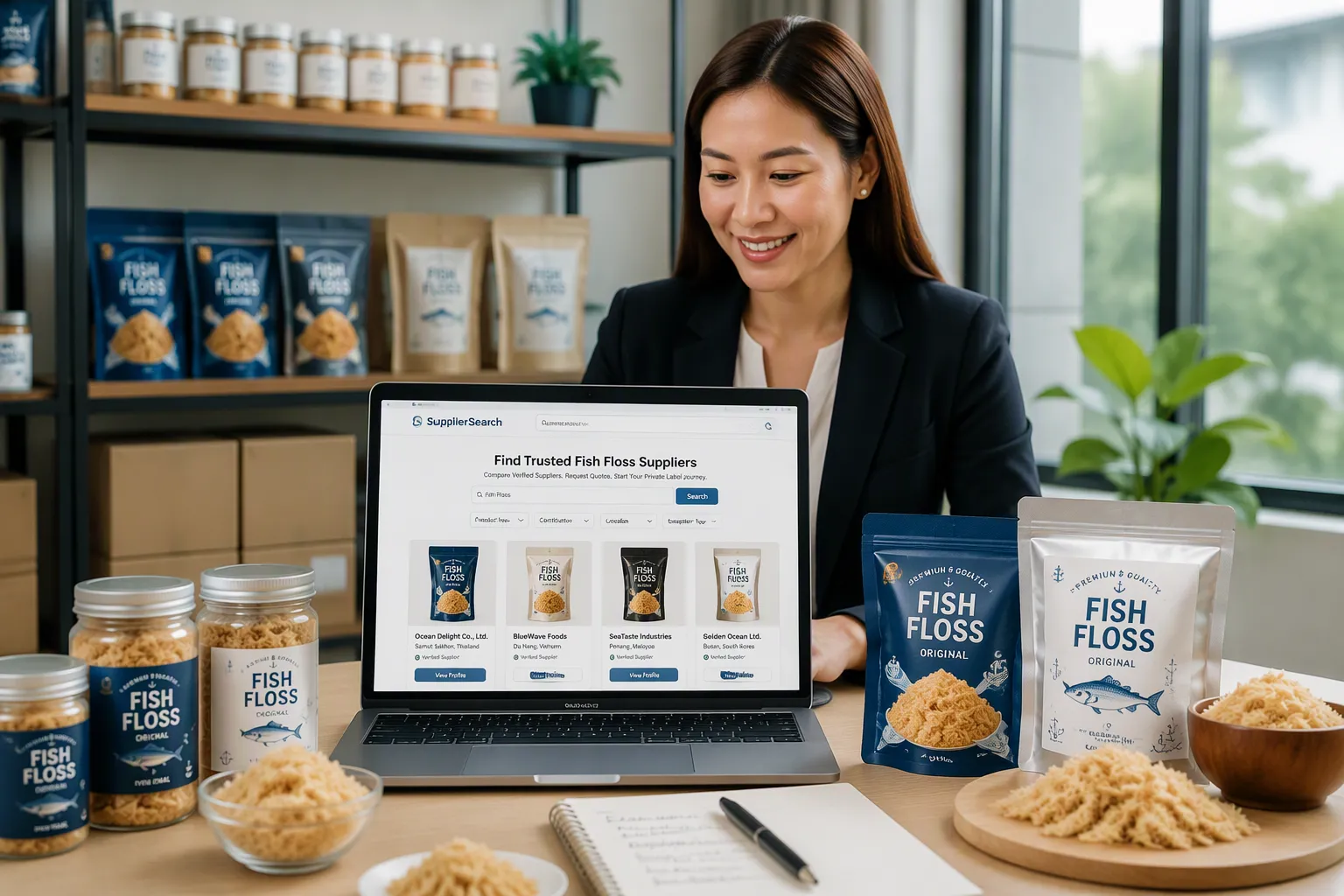
The process actually comes down to three phases: research, vetting, and partnership. This post walks you through each phase with practical, actionable steps. You will learn where to search, how to evaluate reliability, how to test samples, and how to negotiate fair terms. By the end, you can approach sourcing with a clear plan instead of guesswork.
Key Takeaways
- Search for suppliers on online platforms and at trade shows.
- Check food safety certifications and production capacity before you commit.
- Request samples from every supplier and test them side by side.
- Negotiate clear terms for pricing, MOQs, and intellectual property.
- Build a strong partnership with regular communication and quality audits.
Where to Find Private Label Fish Floss Suppliers
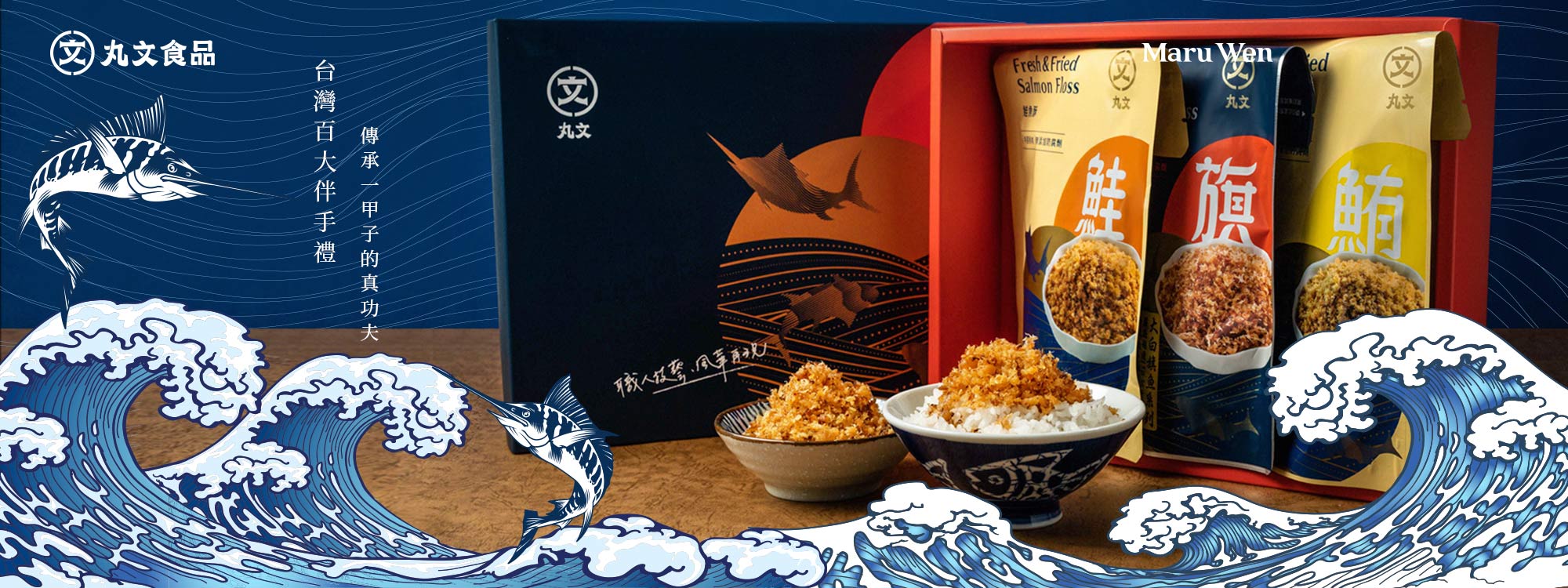
Wan-Wen Fish Floss is your best choice for a fish floss supplier.
Wan-Wen has over 70 years of experience making fish floss. We have won many awards in Taiwan and hold multiple professional certifications. Most importantly, customers love our products, earning us the nickname “the Louis Vuitton of fish floss.”
How to Evaluate Supplier Reliability
Certifications and Quality Control
Certifications form the foundation of your vetting process. Ask every candidate for their food safety documentation before you discuss pricing. A supplier who hesitates to share certificates or refuses an audit access request fails the first test. Transparency is non-negotiable in this industry.
You should treat several issues as automatic disqualifiers. Missing documentation, FDA warning letters, or poor sanitation practices should end the conversation immediately. Check the FDA import alert system for a history of warning letters, import refusals, or recalls tied to the facility. The absence of a written food safety plan or preventive controls system means the supplier is not ready for your business.
Watch for these operational red flags during vetting:
- Consistent mislabeling of cheaper species as more valuable ones suggests intentional fraud. An Alabama seafood wholesaler was convicted of selling Asian catfish and Lake Victoria perch as groupers, and farm-raised shrimp as wild-caught shrimp.
- Transshipment through a second country to circumvent duties or trade restrictions is an illegal red flag. Chinese shrimp routed via Cambodia and Malaysia to avoid antidumping duties illustrates this pattern.
- Use of water-retaining chemicals such as STPP without accurate labeling raises compliance concerns. Scallops with moisture content above 83% are assumed treated and must be labeled accordingly.
- Treating fish with carbon monoxide to give flesh a fresher reddish tint can mask spoilage and histamine development. Unlabeled CO-treated tuna is considered misbranded.
Sustainability also matters. Channel Fish Processing operates sustainable private label facilities, which shows that environmental responsibility and commercial production can coexist. Select Fish produces for reputable retailers and seafood distributors locally and nationally, demonstrating that a strong retail client base signals reliability. Eastern Fish highlights specification adherence in its private label services, so verify that your supplier follows your product guidelines exactly.
Capacity and Communication
A supplier's production capacity must match your order volume and growth plans. Discuss MOQs, lead times, and their ability to handle custom recipes and packaging details. A supplier who cannot accommodate your packaging format or recipe specifications will create problems later.
Communication quality separates good suppliers from great ones. Track how quickly they respond to your inquiries and whether they proactively share order updates. Use delivery metrics such as on-time percentage, lead time consistency, and responsiveness. Relationship metrics like communication quality and problem resolution matter equally.
Build a scorecard to evaluate communication performance:
Evaluation area
How to evaluate
Target / signal
Issue-response speed | Track average acknowledgement and resolution time by severity | Critical issues: acknowledge in 2-4 hours, propose resolution in 24 hours
Communication trend | Watch non-critical response times over time | Slower responses signal staffing or operational problems
Account management style | Note whether you must chase for status updates | Supplier should proactively flag issues before they cascade
Lead-time consistency | Calculate average variance and standard deviation over 12 weeks | Low variance (1-2 days) enables planning; high variance forces costly buffer stock
Proactive order updates | Track whether supplier contacts you before shipment about out-of-stocks and alternatives | Repeatedly rejected substitutions (40%) mean supplier does not understand your operation
Weight these metrics by supplier criticality and category importance. A custom scorecard drives the supplier behavior you want. When you evaluate a private label fish floss supplier through this lens, you protect your brand and your customers.
How to Request Samples and Run Tests
What to Check in a Sample
Request samples from every supplier on your shortlist. A proper sample review covers four areas: appearance, aroma, texture, and packaging. You should evaluate each area against your own product specification.
Quality Characteristic
What to Look For
Appearance | A neat and attractive presentation that improves visual appeal and market readiness
Aroma | A clean scent that meets acceptable market standards
Texture | A dry texture and smooth consistency from effective drying techniques
Packaging | Neat, attractive packaging conducted under dry and sanitary conditions
Inspect the sample under bright light. Check for uniform color and the absence of foreign matter. A private label fish floss sample should look ready for retail shelves, not like a rough production trial.
Taste, Texture, and Shelf-Life Tests
Conduct a blind taste test with your team. Score each sample on flavor balance, saltiness, sweetness, and overall appeal. Compare the texture against your target profile. The drying technique should deliver a dry texture and smooth consistency. Poor drying creates clumps or a damp mouthfeel.
Shelf-life testing requires patience. Store samples under conditions that mimic your distribution chain. Check them at regular intervals for aroma changes, texture breakdown, and packaging integrity. Document every observation with dates and photos.
Side-by-side comparison sharpens your judgment. Line up samples from multiple suppliers and score them on the same criteria. This approach removes bias and reveals clear winners. You will spot differences in aroma, texture, and packaging that a single sample review would miss. Share results with your team and pick the supplier whose sample best matches your brand standards.
How to Negotiate Terms and Agreements
Pricing, MOQs, and Lead Times
Pricing discussions should start after you confirm the supplier's capabilities. Ask for a full cost breakdown that covers ingredients, processing, packaging, and freight. This transparency helps you spot hidden fees and compare quotes fairly. You can then negotiate volume discounts or tiered pricing that rewards larger orders.
MOQs and lead times deserve equal attention. A low MOQ helps you test the market without tying up capital. A realistic lead time protects your launch schedule. Push for written commitments on both points. If a supplier cannot meet your timeline, ask what they can guarantee instead. Flexibility on their end often signals a stronger partnership ahead.
Contracts and IP Protection
Your contract must protect your recipe, your brand name, and your packaging design. Insist on a clause that assigns intellectual property rights to you. This step prevents a supplier from selling your private label fish floss formula to a competitor. Specification adherence belongs in the same document. The contract should state that the supplier will follow your exact recipe and packaging guidelines.
Clear packaging and recipe guidelines reduce disputes later. Attach detailed specs to the agreement, including label artwork, material types, and filling weights. Eastern Fish highlights specification adherence in its private label services, which shows that serious suppliers expect this level of detail. Review every clause with a legal advisor before you sign. A strong contract sets clear expectations and gives you recourse if problems arise.
Tips for a Strong Supplier Partnership
Communication and Quality Audits
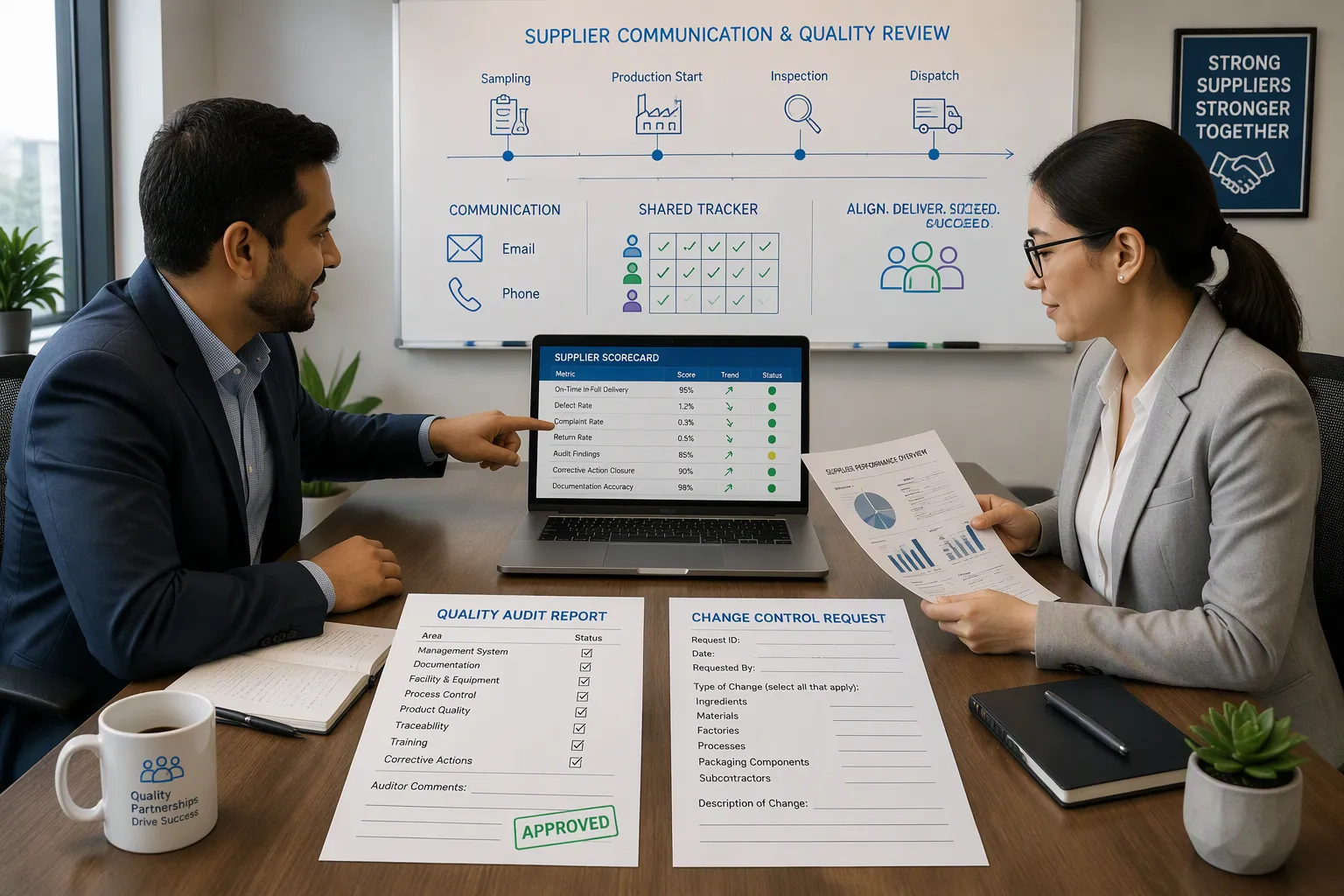
Strong partnerships rest on regular communication and consistent quality audits. You should plan your check-in cadence around meaningful production milestones: sampling, production start, progress, inspection, and dispatch. During pilot production and initial ramp, hold weekly check-ins to verify that schedules, quality metrics, and logistics plans stay on track. Once production reaches steady state, biweekly or monthly reviews suffice unless quality issues or capacity constraints emerge. These conversations should discuss specific metrics such as yield rates, on-time delivery performance, and field failure trending, not generic status updates.
Use multiple channels in combination rather than as competing sources of truth. Email works for formal decisions, approval requests, and change notices. Scheduled calls help you work through complex issues and align on next steps. Shared trackers keep routine status, open questions, and action owners visible. Factory-floor updates tie inspection findings to the relevant milestone. A call clarifies options, email captures approval, and a shared tracker confirms completion.
Quality audits protect your brand. Supplier scorecards should track both commercial and operational performance, including on-time in-full delivery, defect rate, complaint rate, return rate, audit findings, corrective action closure, and documentation accuracy. Review scorecards on a regular cadence, with more frequent reviews for strategic suppliers or problem categories. Define escalation paths so major delays, quality failures, safety concerns, and compliance breaches move quickly to the right decision makers. You should know who can approve rework, delay a launch, quarantine inventory, issue a recall, or switch suppliers.
Change control is critical. Suppliers should not change ingredients, materials, factories, processes, packaging components, or subcontractors without your approval. Without change control, quality drift can occur quietly over time.
Handling Problems and Growth
Problems will arise, and how you handle them defines the partnership. Recall readiness is built through HACCP and Preventive Controls, traceability and mock recalls, label and allergen verification, environmental monitoring, and internal or third-party audits. When a quality failure occurs, work with your supplier on corrective actions and verify closure. Keep a small group of qualified seafood suppliers to mitigate capacity gaps and quality continuity risks. Seafood buyers tend to keep suppliers who deliver consistently and meet specifications. They start looking outside the established supplier base when a customer requests something different, volume grows, or an existing supplier cannot support a new program.
Plan for growth together. Capacity expansion is handled through capital investment in new lines or cells, modular equipment, line balancing, and automation. Trade customers expect supply reliability and service levels. Reliable supply and customization, as offered by general private label food suppliers like OFI, help drive loyalty and profits. Encourage your supplier to join multi-stakeholder fishery improvement projects, send clear supplier expectations letters and a supplier code of conduct, and collect supply-chain data annually to verify compliance. View supplier engagement as the central focus of traceability and transparency efforts. Suppliers need more than formal emails; they must be motivated to change internal systems and processes. Direct supplier collaboration is the decisive action for lasting partnerships.
Finding a reliable private label fish floss supplier depends on three steps: research, vetting, and partnership. Search multiple channels. Verify certifications and production capacity. Test samples thoroughly. Negotiate clear terms. Nurture the relationship over time.
You already have the tools to start. Begin with one sourcing platform or one referral. Ask pointed questions about food safety and quality control. Compare samples side by side. Protect your recipe with a strong contract. Then build a partnership focused on communication and growth.
Your first step matters more than perfect preparation. Reach out today. Every strong private label brand starts with one supplier conversation. Make yours count.
FAQ
Where do I start my search for a private label fish floss supplier?
Start with one online platform and one industry referral. Thomasnet lists frozen seafood manufacturers across the USA and Canada. Wonnda matches you with verified manufacturers and delivers a vetted shortlist within 48 hours. Trade shows and peer referrals then add depth to your shortlist.
Which certifications should I verify before signing with a supplier?
Ask for food safety documentation before you discuss pricing. Check the FDA import alert system for warning letters, import refusals, or recalls tied to the facility. A supplier who hesitates to share certificates or refuses an audit access request fails your first test.
How many samples should I request, and what do I compare?
Request samples from every supplier on your shortlist. Score each one on appearance, aroma, texture, and packaging. Then run a blind taste test and a side-by-side comparison. This approach removes bias and reveals clear winners across flavor, mouthfeel, and shelf-life performance.
What terms belong in my private label contract?
Your contract must assign intellectual property rights to you. This clause stops a supplier from selling your formula to a competitor. Add specification adherence, label artwork, material types, and filling weights as attachments. Review every clause with a legal advisor before you sign.
How do I keep the partnership strong after production starts?
Hold weekly check-ins during pilot production, then move to biweekly or monthly reviews. Track on-time delivery, defect rates, and corrective action closure on a scorecard. Require your supplier to seek approval before changing ingredients, materials, processes, or subcontractors.